
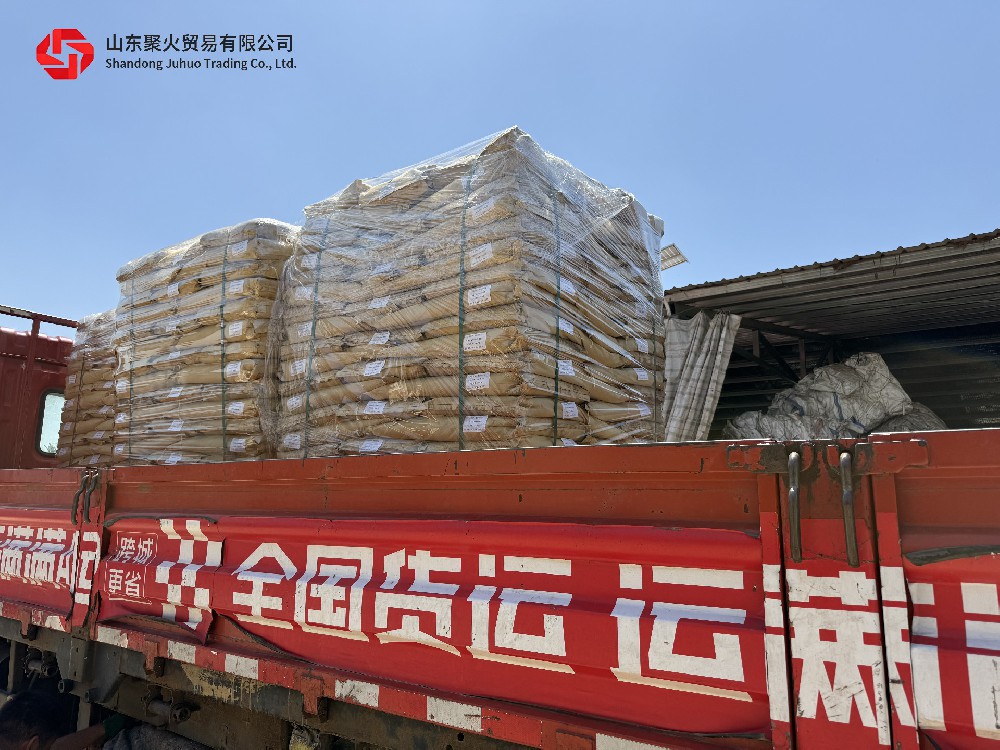
Sheared steel fiber, as a type of Class II steel plate sheared fiber, complies with current authoritative standards GB/T39147-2020, YB/T151-2017, and JG/T472-2015. Relying on its high cost-performance advantage, it holds a significant market share in municipal infrastructure, prefabricated components, and general flooring. With the upgrading of domestic infrastructure, the popularization of prefabricated buildings, and the continued implementation of Belt and Road overseas projects, the entire industry is moving away from extensive low-price competition and steadily advancing towards standardized production, intelligent manufacturing, green and low-carbon development, and dual development in domestic and international markets.
I. Industry Standards Implemented, Market Entry Barriers Continue to Rise
Since the official implementation of the national standard GB/T39147-2020, strict regulations have been established for the product parameters of sheared steel fibers: the aspect ratio must be strictly controlled within the range of 40-70; bending performance must meet the requirement of not breaking after two 90° bends in both directions; and the tensile strength must reach a minimum of 400MPa. Bidding for large-scale engineering projects and third-party testing all use national standard indicators as the acceptance criteria. Small workshops that previously relied on inferior steel strips, products with excessive dimensional deviations, and substandard mechanical properties are gradually being eliminated from large-scale infrastructure projects.
At the same time, the Ministry of Housing and Urban-Rural Development is promoting green building materials policies, encouraging the recycling of cold-rolled steel strip raw materials, and guiding enterprises to upgrade to fully automated shearing and corrugated forming equipment to reduce dimensional errors caused by manual labor. Design institutes, concrete mixing plants, and construction units are placing greater emphasis on product quality stability. The market share of 700MPa-1000MPa high-strength sheared steel fibers is increasing year by year, and the industry is becoming more standardized. Referring to the JG/T472-2015 standard, the fiber content is scientifically set based on engineering conditions. The standard content for floor slabs is 30-40 kg/m³, and for bridge deck paving, it is 45-60 kg/m³. This abandons the outdated approach of blindly increasing the content, balancing engineering safety and cost control.
II. Clear Domestic Application Scenarios and Further Optimized Market Structure
1. Stable Growth in Domestic Downstream Demand
Shear-type steel fibers focus on economical crack resistance, their core function being to solve early plastic shrinkage cracks in concrete. They, along with hook-type steel fibers emphasizing heavy-duty fatigue resistance and milled steel fibers focusing on wear resistance and impact resistance, form a differentiated product division. They are mainly used in lightweight load-bearing projects such as rural roads, industrial park floors, non-motorized vehicle pavements, drainage ditches, box culverts, storm drain grates, shotcrete slopes, and basement foundation layers. They offer significant advantages in replacing traditional steel mesh, not only simplifying on-site construction processes but also effectively reducing later cracking and sandblasting problems, significantly lowering labor costs and subsequent maintenance expenses. 1. The rapid development of prefabricated components in recent years has driven a steady increase in demand for sheared steel fiber.
2. The industry's competitive landscape is polarized. Raw materials mainly rely on cold-rolled steel strip resources from large domestic steel mills. Manufacturers are divided into two tiers: the first tier consists of large-scale manufacturers that use qualified steel strip raw materials, are equipped with automated production lines, and provide complete testing reports with their products, supplying municipal engineering projects and large prefabricated component factories; small and medium-sized processing plants mainly produce low-end 400-grade products, primarily targeting rural self-construction projects. Nowadays, engineering procurement parties are increasingly emphasizing product quality inspection data, forcing small and medium-sized factories to upgrade the quality of raw materials, and market resources are increasingly concentrating on compliant enterprises.
3. The foreign trade market is experiencing a boom, with exports continuing to expand. With the concentrated commencement of infrastructure projects in countries along the Belt and Road Initiative, and the vigorous construction of roads and coastal defense projects in Southeast Asia such as Malaysia, Vietnam, Thailand, and Indonesia, the export of domestically produced sheared steel fiber is entering a period of rapid growth. Compared to imported products from European companies like Bekaert, domestic products offer better value for money. Manufacturers can produce according to the EN14889-1 international standard and provide English test reports, meeting the requirements of overseas third-party inspections.
Shandong, leveraging the logistics advantages of Qingdao Port, has become one of the core production areas for steel fiber exports. Many local companies adopt the CIF port transaction model, with overseas buyers paying the 13% import VAT themselves. Customers are increasingly opting for one-stop purchasing, procuring not only sheared steel fiber but also hook-type steel fiber, milled steel fiber, and polypropylene fiber. Domestic companies are increasingly providing comprehensive export support services. In 2026, China's total steel fiber exports steadily increased, with sheared steel fiber accounting for a continuously rising share of exports.
IV. Upgraded Production Processes, Green and Low-Carbon Development Becomes a Long-Term Trend: Traditional single-machine shearing equipment is gradually being phased out, and new-generation intelligent production lines are realizing the transformation of steel strip production.