
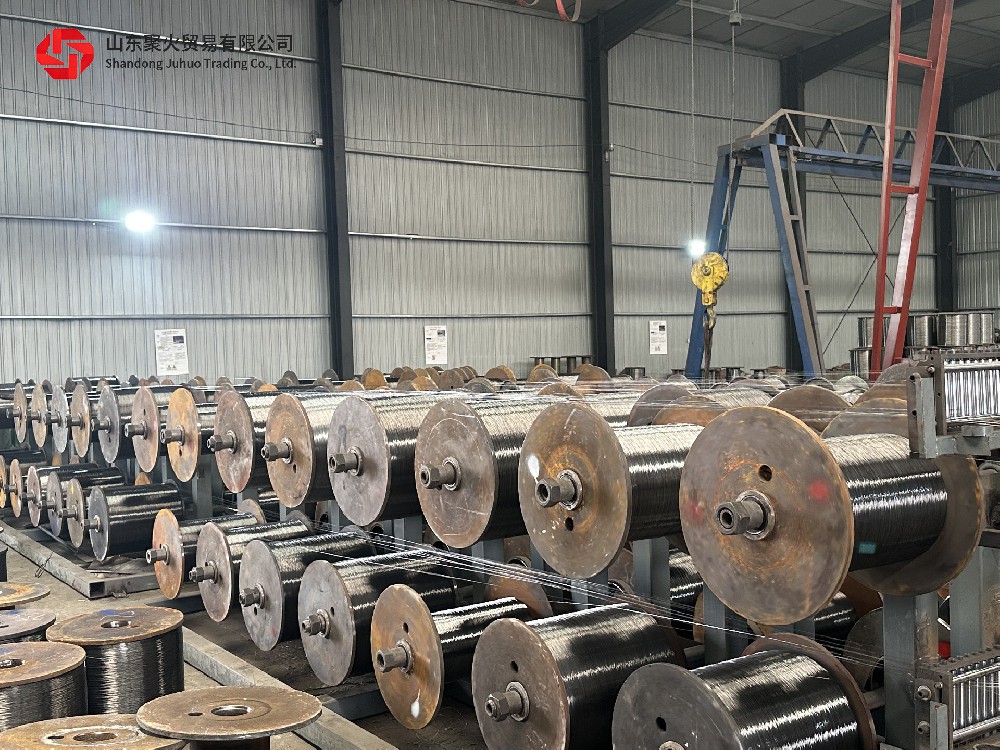
The end-hook steel fibers, with their dual-end mechanical anchoring, high tensile strength, and strong crack resistance and toughness, are key reinforcing materials for heavy-load infrastructure, underground engineering, and special structures. In 2026, driven by four major forces - the strategy of building a transportation-strong country, underground space development, green building material substitution, and technological iteration and upgrading - the industry has shown a development pattern of stable and expanding scale, high-end structure, deepened application scenarios, and continuous improvement in concentration, entering a new stage of high-quality development.
I. Market Size: Steady Growth, Structural Advantages Highlighted
In 2025, the market size of end-hook steel fiber in China was approximately 5.24 billion yuan, with a year-on-year growth rate of 7.2%, which was higher than the average growth rate of ordinary concrete admixtures. It accounted for 58.89% of the overall steel fiber market share and was the largest sub-category. In 2026, it is expected to increase to 5.6-5.8 billion yuan, with a growth rate of 7%-8%, and the compound annual growth rate remained stable within the range of 6.5%-7.5%.
In the global market, the size was approximately 1.3 billion US dollars in 2025, and it is expected to expand at a **8.2%** annual compound growth rate from 2026 to 2033. China contributed over 50% of the growth increment, making it a core growth pole in the global market. The product structure continued to optimize: high-strength type (≥1500MPa), high-bonding type, and corrosion-resistant coating type accounted for 42% in 2024 and are expected to reach 50% in 2026, while the proportion of ordinary carbon steel low-end products continued to shrink.
II. Technological Trends: Precision Manufacturing, Performance Upgrade, Green and Low-Carbon
(1) Precision Processing, Breaking Through Anchoring Performance
Leading enterprises adopt high-speed cold heading forming and three-dimensional bent hook precise control technology. The end-hook angle / curvature is controlled within 60°-90°, with a tolerance of ≤±1°; the length / diameter tolerance is controlled within ±0.1mm, and the long-to-short ratio deviation is ≤±0.5. The double-end anchoring structure enables an interface bonding strength of 12.6-14.3MPa, which is 128% higher than that of ordinary fibers and the tensile strength is increased by 3 times; the tensile strength exceeds 2500MPa, suitable for extreme conditions.
(2) Customized Products, Deepening Scenario Adaptation
A multi-material system of carbon steel, stainless steel, copper plating, zinc-aluminum-magnesium plating was formed; covering lengths of 6-60mm and diameters of 0.2-1.2mm, it can customize single-hook, double-hook, and three-branch hooks and other special shapes. The row-type products use water-soluble bonding agents to form bundles, solving the problem of fiber aggregation and improving construction efficiency by 40%, suitable for tunnel spray concrete and other scenarios.
(3) Green Production, Accelerating Low-Carbon Transformation
The industry has fully promoted low-energy consumption drawing, cyanide-free plating, and low-temperature curing technologies, reducing production energy consumption by 25% and reducing solid waste and wastewater by 60%; the steel recycling rate is over 90%, and the carbon footprint throughout the life cycle is lower than the industry benchmark by 15%. Leading enterprises have built AI visual online monitoring production lines, with batch qualification rates increasing from 92.4% to 99.1%, and energy consumption and labor costs have both decreased.
III. Application Pattern: Traditional Infrastructure as the Foundation, Emerging Scenarios Bursting
(1) Transportation Infrastructure: Core Scenarios, Stable Demand
Bridges, tunnels, high-speed rail / subway are the largest application fields, accounting for approximately 52% in 2025. The penetration rate in tunnel lining exceeds 70%, reducing cracks by more than 65% and reducing leakage risks; airport runways, heavy-load road surfaces replace traditional steel mesh by 40%, extending the service life by 3 times. The construction of the Sichuan-Tibet Railway and Shenzhen-Zhongshan Bridge has driven a surge in demand for customized products with low-temperature toughness and high resistance to chloride ion corrosion.
(2) Industrial Flooring: High-Growth Track, Accelerating Replacement
The demand for logistics warehouses, heavy-load factories, and port docks has exploded, accounting for 28% in 2025, with an annual growth rate of over 15%. End-hook fibers can enhance the impact resistance and wear resistance of the floor, reducing maintenance costs, and the penetration rate has increased from 2024's 23.8% to 29.6%, becoming a standard material for industrial flooring.
(3) Special and Emerging Scenarios: Penetration Speeding Up
The demand in fields such as nuclear power safety shells, military protection, and marine engineering is growing rapidly, with a year-on-year growth of over 70% in the nuclear power sector; the application of water tunnels, underground pipe galleries, and prefabricated prefabricated components has deepened, with the penetration rate of prefabricated components reaching 34.7%. The overseas market has been steadily expanding. In 2025, the export volume increased by 18% year-on-year. The main markets served were Southeast Asia, the Middle East, and Europe. The premium prices of high-end products were significantly higher.